
Castle Cary
Discover Castle Cary by rail, including station access, the market town, walking routes, local history and links to the wider countryside.
The Station
The station forms the junction where for a distance the Heart of Wessex Line joins the line from Taunton to Reading and London Paddington and is where many passengers make a connection.
Primary access to Castle Cary Station is from the A371. There is level access to Platform 1 but Platforms 2 and 3 are accessible only by the footbridge. Direct access to and from Ansford to all platforms is only by way of the footbridge.
There is a pedestrian path from the station through Ansford to Castle Cary town.
Once every two years or so, Castle Cary becomes a major station as it is where festivalgoers alight for the Glastonbury Festival, joining a fleet of shuttle buses at the Station for the short onward journey to the Festival site at Worthy Farm, Pilton
Castle Cary Station serves the communities of Castle Cary and Ansford.
Members of the Castle Cary community have way-marked a walking route of just under a mile from the station to the town, starting at the bottom of the footbridge steps from Platforms 2 and 3 and passing via Ansford through pretty lanes and green spaces to the centre of Castle Cary down Florida Street just by the Round House . The route goes via St Andrew’s Church at Ansford, where Parson James Woodforde, the famous diarist of rural life, once preached. The Old Parsonage where he was born is close by.
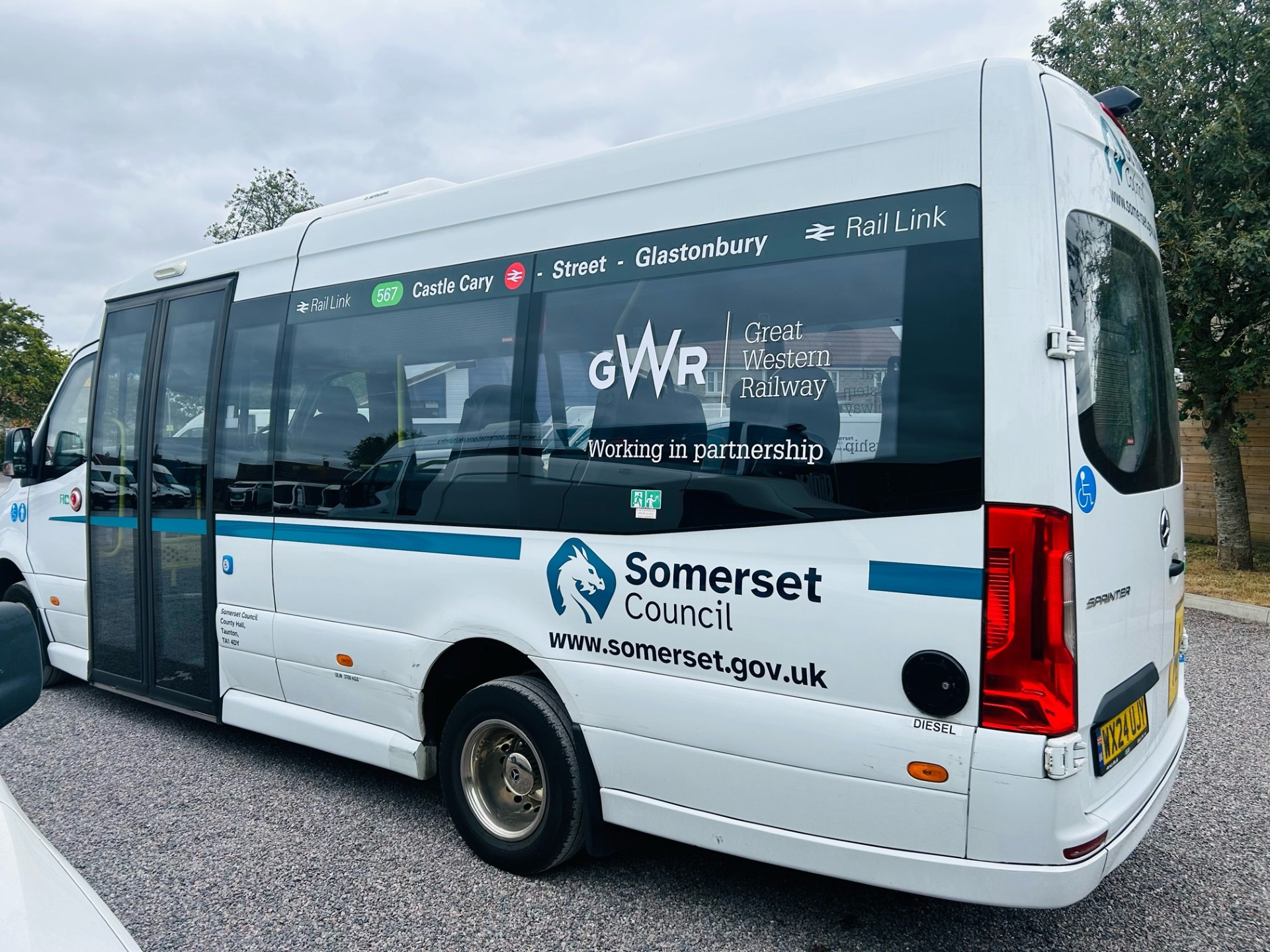
Castle Cary to Glastonbury by bus
The Surrounding Area
Castle Cary is a pretty market town which has many places to shop, eat and drink.

The Creamery – Castle Cary Station
A taste of Somerset, right beside the railway.
Step off the train at Castle Cary and discover The Creamery, a beautifully restored former milk factory brought back to life as a working dairy, farm shop and café.
Originally built in 1912, the Creamery was once at the heart of Castle Cary’s dairy industry. Local farmers brought their milk here to be made into cheese and other dairy products, which were then transported by rail to London. More than a century later, the building’s connection with the railway continues, with locally produced dairy products once again being made on site.
Today, visitors can watch cheese-making through the viewing windows, enjoy food and refreshments at the Station Café, and browse a selection of produce in the farm shop. The building celebrates its railway heritage throughout, making it a memorable place to pause before or after your journey.
With its distinctive historic chimney and position alongside the station platform, The Creamery is one of Castle Cary’s most distinctive landmarks – and a wonderful example of how railway heritage can be given a new life.
Arrive by train. Stay awhile. Discover Somerset.

Market House
The centrepiece of the town is the Market House, built in the 19th Century, which houses the Castle Cary and District Museum.
The Market House is also the centre of the Tuesday Market, held every Tuesday of the year, featuring both produce and craft stalls.
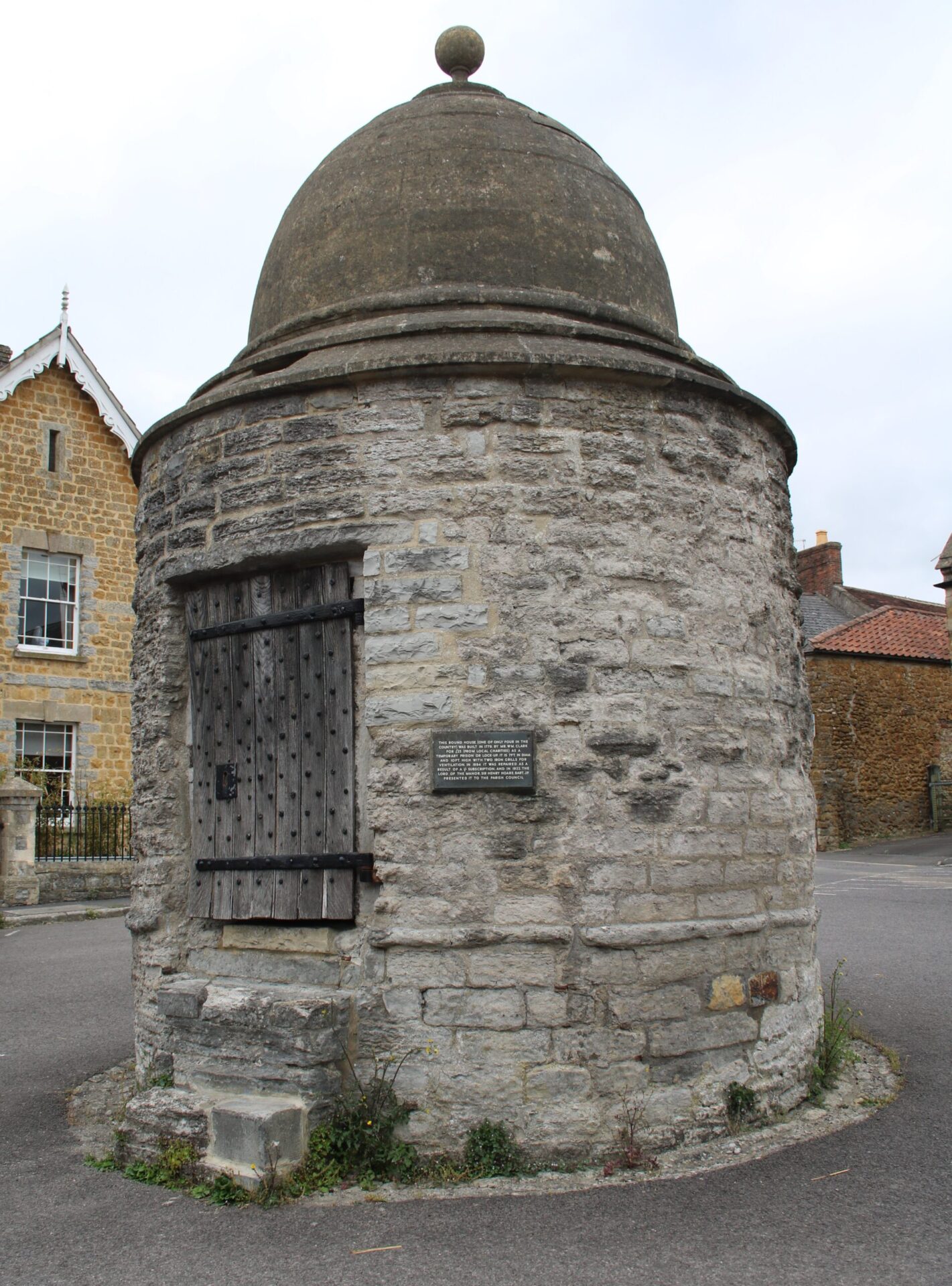
Round House Lock Up
Behind the Market House is the Round House Lock Up, constructed in 1779 one of only four such buildings in the country
Walking Routes
For long distance walkers, the Macmillan Way, the Monarch’s Way and the Leyland Trail all pass through the town, this is also a great starting point for walking into beautiful countryside.
Douglas Macmillan
Perhaps the town’s most prominent local son was Douglas Macmillan MBE, the founder of what is now the major national charity Macmillan Cancer Support. He was born in Castle Cary in 1884 and died in Ansford in 1969.
Ansford
Ansford is a growing village community which is actually nearer to the station than Castle Cary itself.
The Newt
Adjacent to the village is the Newt, a Hotel and Garden complex built by Emily Estates centred on the Grade II* listed Hadspen House. The House was built gradually into its current form over the course of the 18th Century as the home of the Hobhouse family from Bristol, who had made their fortune as merchants in the slave, sugar and tobacco trades.