
Chetnole Halt
The Station
Chetnole Halt is a request stop. To get off, you need to tell the conductor who will direct you to the front door. To join a train you need to indicate clearly as it approaches that you wish to do so. Children really enjoy holding out their hand to stop a train!
Chetnole does not have disabled access, being reached by a flight of steps from the bridge over the railway.
The Surrounding Area
To get to the village of Chetnole from the Halt (about 15 minutes’ walk), turn left at the top of the steps and along the road, turning left again at the T-junction. It is possible to cut that corner via a marked footpath over the field and lane.
Chetnole is a small rural village on the River Wriggle, mainly built since the 1960s, but containing some historic gems, such as a Dorset long house on Deep Ford Lane, and two fine country houses in Nappers and Chetnole House.
The Church of St. Peter’s, Chetnole, deserves a visit too, with its 13th Century barrel-vaulted nave, a 15th Century tower (look out for the gargoyles), 17th Century porch and 19th Century chancel.
Chetnole Playing Field behind the churchyard and leading down to the river is a lovely green space if you have children or dogs that need to let off steam. The village does ask that o people with dogs respect their environment.
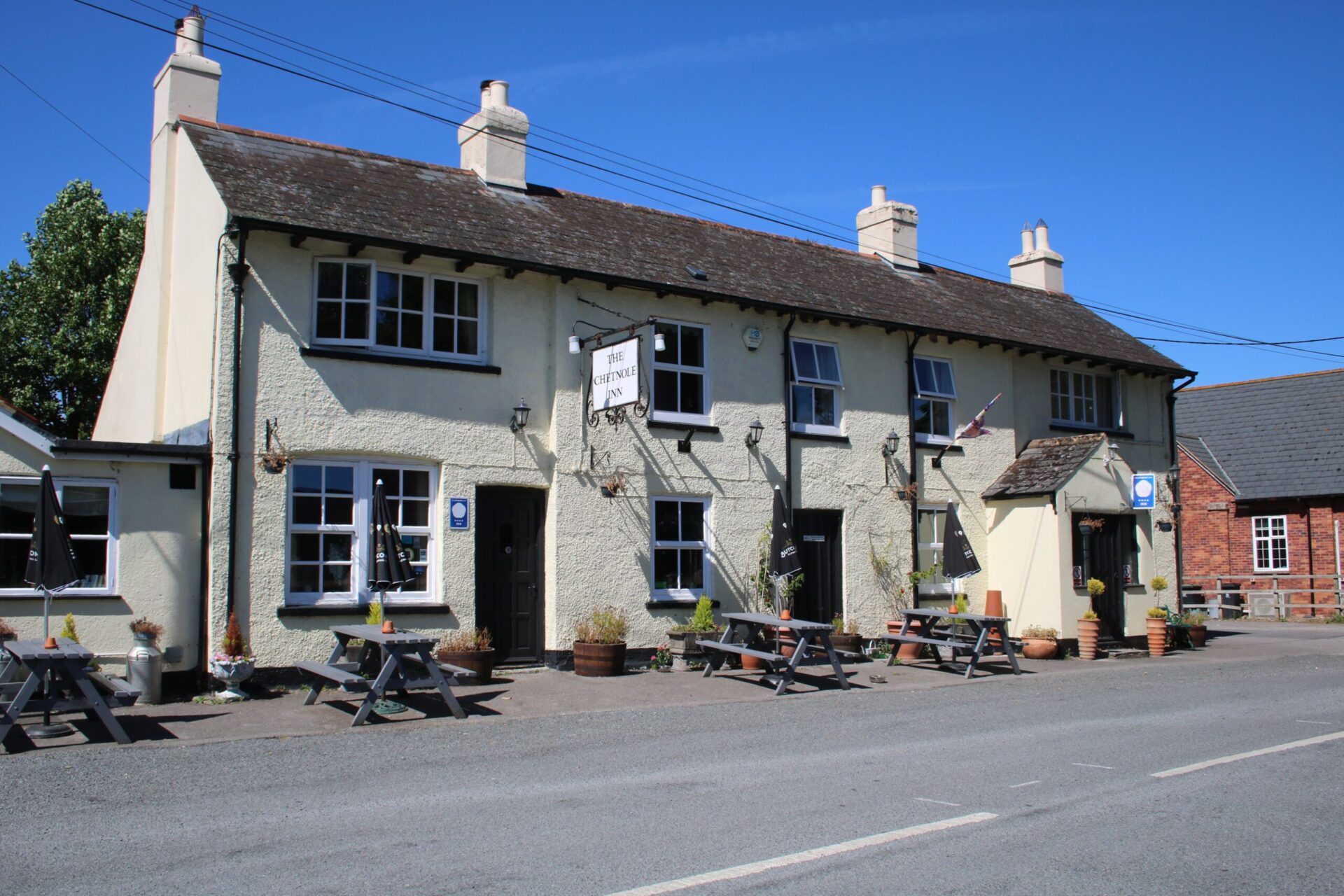
Chetnole is well worth a visit for the friendly and award winning Chetnole Inn. Real ales, good food and a child-friendly garden make this atmospheric pub a very tempting destination for a day out. They have three lovely bedrooms too, which would make a great base for exploring this part of Thomas Hardy’s Wessex on foot.
No photo could capture Chetnole as well as local artist, Linda Carroll, has in this view of the village and some of its residents. Walking from the station, you would enter on the right of the picture. The yellow building opposite the church is the Chetnole Inn.

Chetnole is a vibrant village which hosts an annual Flower Show at the beginning of August every year.
Chetnole adjoins the parishes of Stockwood, Melbury Bubb and Batcombe which form the northern boundary of the Dorset Area of Outstanding Natural Beauty. These are the parishes which were immortalised by Thomas Hardy as Little Hintock in “The Woodlanders”. Keen walkers can sample their not too much changed rural joys by turning right at the end of the road.
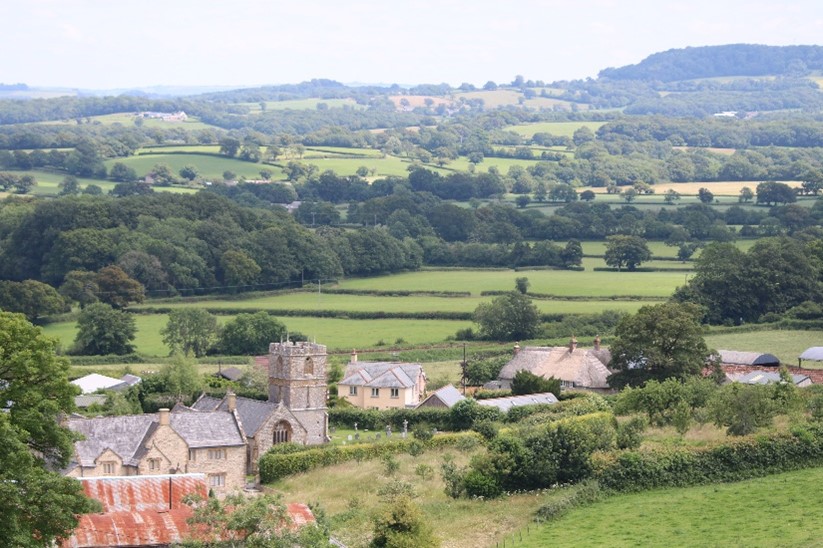
St Mary’s Church in the tiny community of Melbury Bubb, with a 15th Century tower, but otherwise a 19th century restoration, contains a remarkable stone font, created from the base of an upturned cross, covered with a frieze of animals: a stag, a wolf, a lion, and a couple of smaller animals intertwined.
Alternatively turn right at the top of the steps (but take care along the narrow winding road) to Stockwood to visit the tiny 15th Century St Etwold’s church, one of England’s smallest, measuring only 9.1m by 3.9m, and now in the care of the Churches Conservation Trust.
There is access by a footpath off the road into the village which joins the MacmiIlan Way and climbs up to a trig point with a splendid view across Blackmore Vale to the Northeast.